
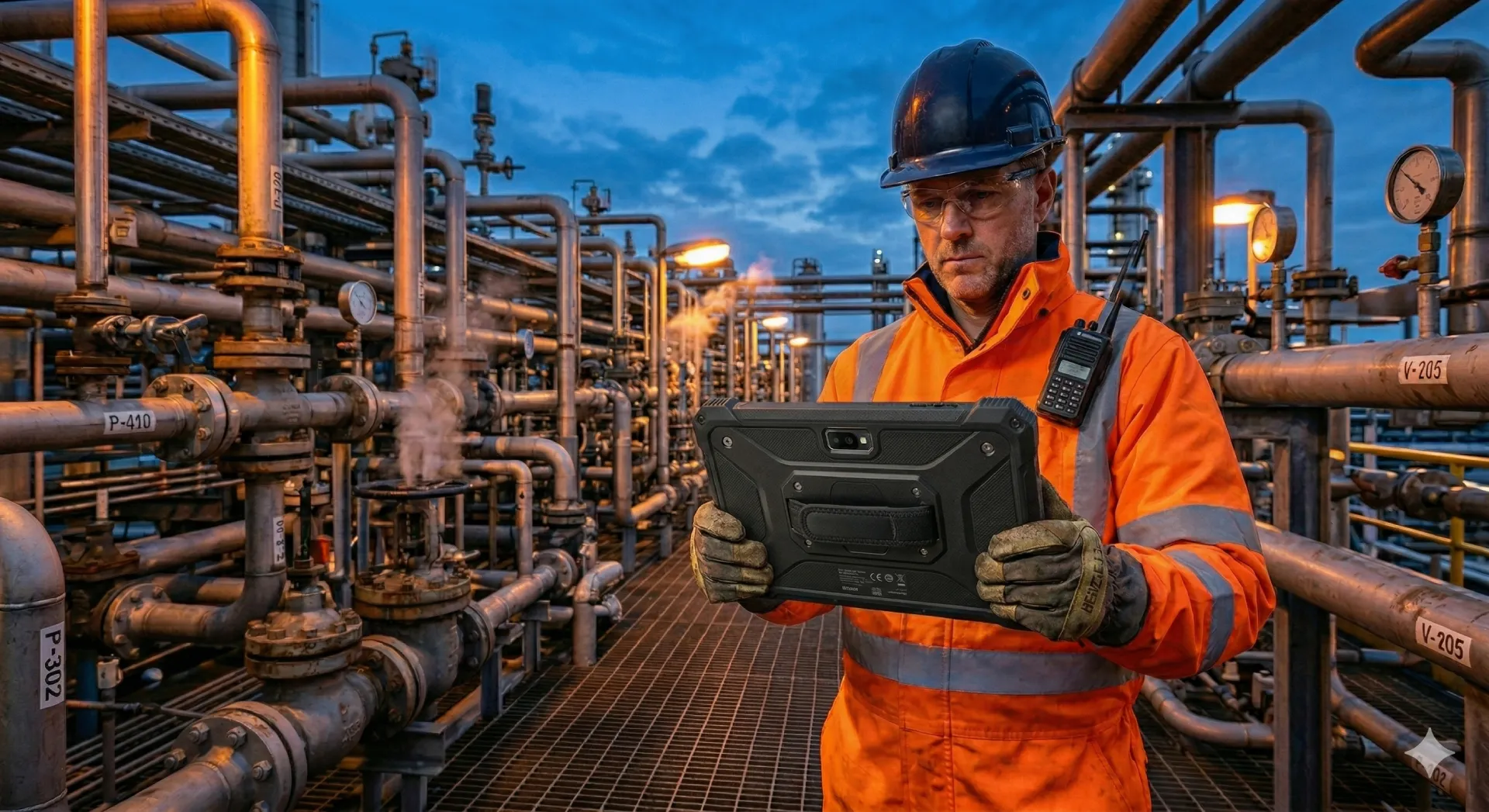
Mobile devices are increasingly being deployed in hazardous work environments, including oil
and gas facilities, chemical processing plants, mining operations, and industrial manufacturing
sites. As this trend continues, many organizations responsible for deploying mobile technology
are encountering hazardous location requirements for the first time. In this context, it is common
for decision makers to assume that if a device is labeled as “certified,” it is suitable for use in
these environments. In practice, this assumption can lead to the selection of solutions that have
not been adequately evaluated for safety.
From a procurement perspective, certifications can appear similar across suppliers. Terms such
as intrinsically safe, ATEX, Zone 2, and Class I Division 2 are often presented without sufficient
context, and supporting documentation may appear equally credible. In some cases, suppliers
will claim that products are self-certified or that certified systems can be installed in the field
without oversight. While these approaches may appear equivalent to third-party certified
solutions, they differ in a fundamental way: the presence or absence of independent verification.
Hazardous location certification, when performed by an accredited third party, is not limited to
the application of a label. It is a structured process designed to evaluate whether a product can
safely operate in a defined environment without becoming an ignition source. This process
includes a detailed review of the product design, verification of materials and construction, and
testing under conditions intended to simulate normal operation and potential failure modes.
Following successful evaluation, safety-critical design elements are formally documented, and
ongoing production inspections are conducted to ensure that manufactured units remain
consistent with the evaluated design. The purpose of this framework is not only to confirm
compliance at a single point in time, but to ensure that the product being used in the field is
representative of what was originally assessed.
A critical aspect of this evaluation, which is often misunderstood, is the role of the mobile device
itself. In many hazardous location mobile solutions, the device is not independent of the
protection method, but rather an integral component of the certified system. The thermal output
of the device contributes to temperature classification. Its electrical characteristics influence the
potential for ignition. Its interaction with the enclosure can directly affect protection methods
such as non-incendive, increased safety, restricted breathing and flameproof. As a result,
certification is based on a specific device, in a defined configuration, evaluated as part of a
complete assembly. Any deviation from that configuration has the potential to alter the safety
characteristics of the system.
Challenges arise when this level of control is not maintained. In cases where devices are
sourced independently, or where enclosures are installed outside of a controlled certification process, there is no mechanism to ensure that the device being used aligns with the device that
was evaluated. There is typically no traceability to manufacturing lots, no verification of internal
construction, and no confirmation that the assumptions made during certification remain valid.
Under these conditions, compliance may be asserted, but it has not been independently verified.
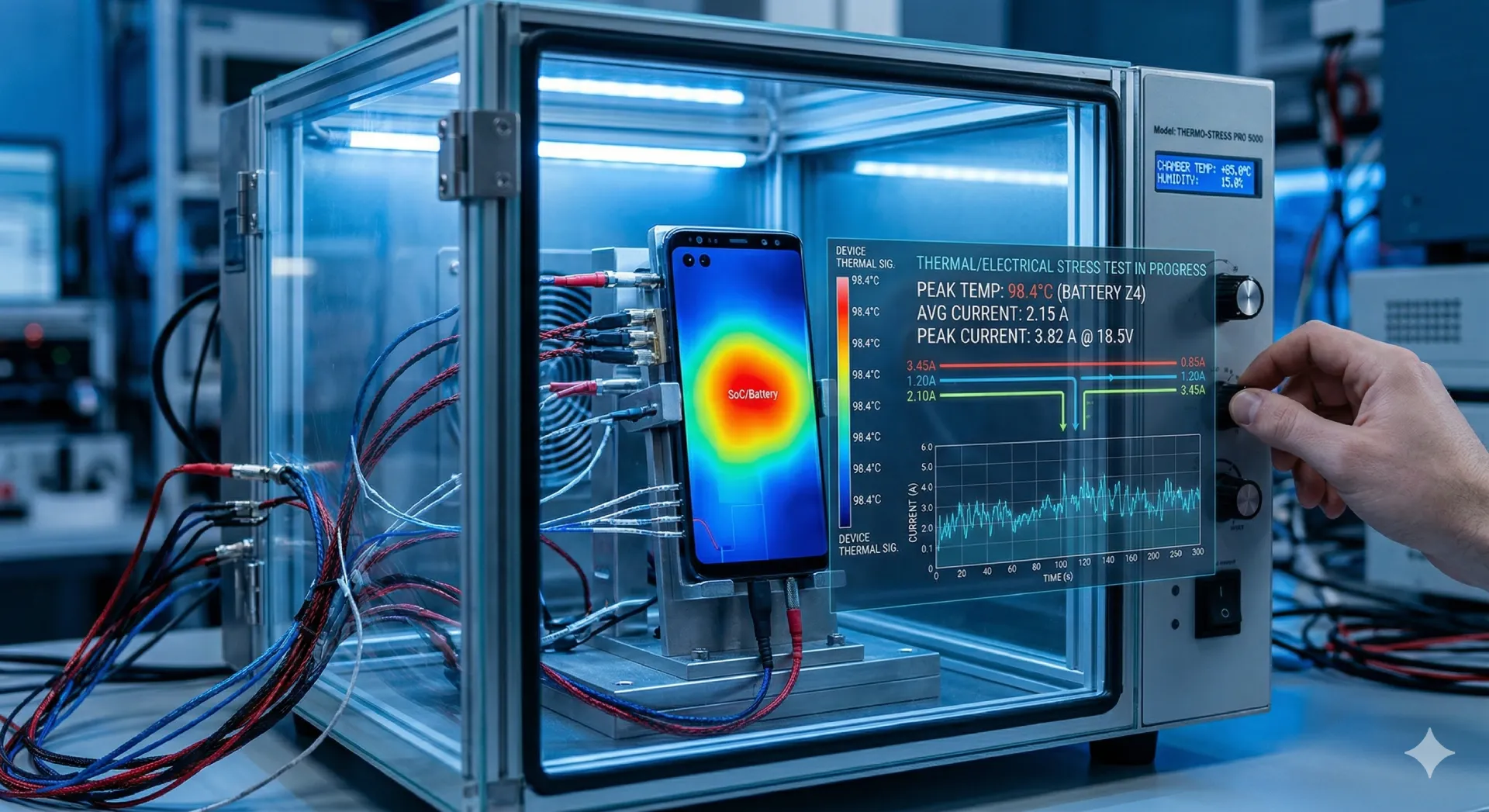
This distinction is central to understanding the limitations of self-certification and self-
declaration. Without third-party involvement, the responsibility for evaluating design, validating
performance, and ensuring ongoing conformity shifts to the manufacturer or, in some cases, the
end user. In practice, this introduces a significant risk of incomplete evaluation. Certain aspects
of hazardous location compliance, including material performance, long-term environmental
durability, and validation of protection methods, require specialized equipment, controlled testing
environments, and technical expertise that are not typically available outside of accredited
certification bodies.
The installation of the device further illustrates this limitation. In a properly controlled certification
program, verification of the device may require traceability to specific production lots, inspection
of internal components, and, in some cases, destructive analysis. These activities are necessary
to ensure that the device meets the assumptions used during the certification process. Such
controls may not be replicated through standard procurement channels or field installation
practices. As a result, solutions that rely on self-installation or post-market integration lack a
reliable mechanism to confirm that the final assembled system meets the intended safety
requirements.
The risks associated with these gaps are not always immediately apparent. In many cases,
systems may operate without issue for extended periods. However, deviations from the
evaluated design can lead to gradual degradation of protection methods, changes in thermal
behavior, or loss of compliance under specific conditions. In hazardous environments, where the
presence of flammable atmospheres is a known factor, these types of deviations can increase
the likelihood of ignition.
Third-party certification addresses these challenges by providing an independent framework for
evaluation and ongoing verification. It ensures that the system has been assessed as a
complete unit, that safety-critical design elements are controlled, and that production units
remain consistent with the evaluated configuration. Perhaps most importantly, it removes the
reliance on assumption and replaces it with documented, repeatable verification.
As mobile technology continues to be integrated into hazardous environments, the importance
of this distinction becomes more pronounced. The difference between a system that has been
independently verified and one that has not is simply a matter of documentation. It reflects
whether the safety of the system has been rigorously established and maintained throughout its
lifecycle.
In hazardous locations, where the consequences of failure can be severe, this distinction is
fundamental.


Comments are closed