
UL Certification for Hazardous Locations
In the North American industrial landscape, the UL Mark is often regarded as the Gold Standard. Whether you are a facility manager in a Texas refinery or an engineer designing a control panel for a grain silo in the Midwest, understanding UL’s role in Hazardous Locations (HazLoc) is critical for both safety and legal compliance.
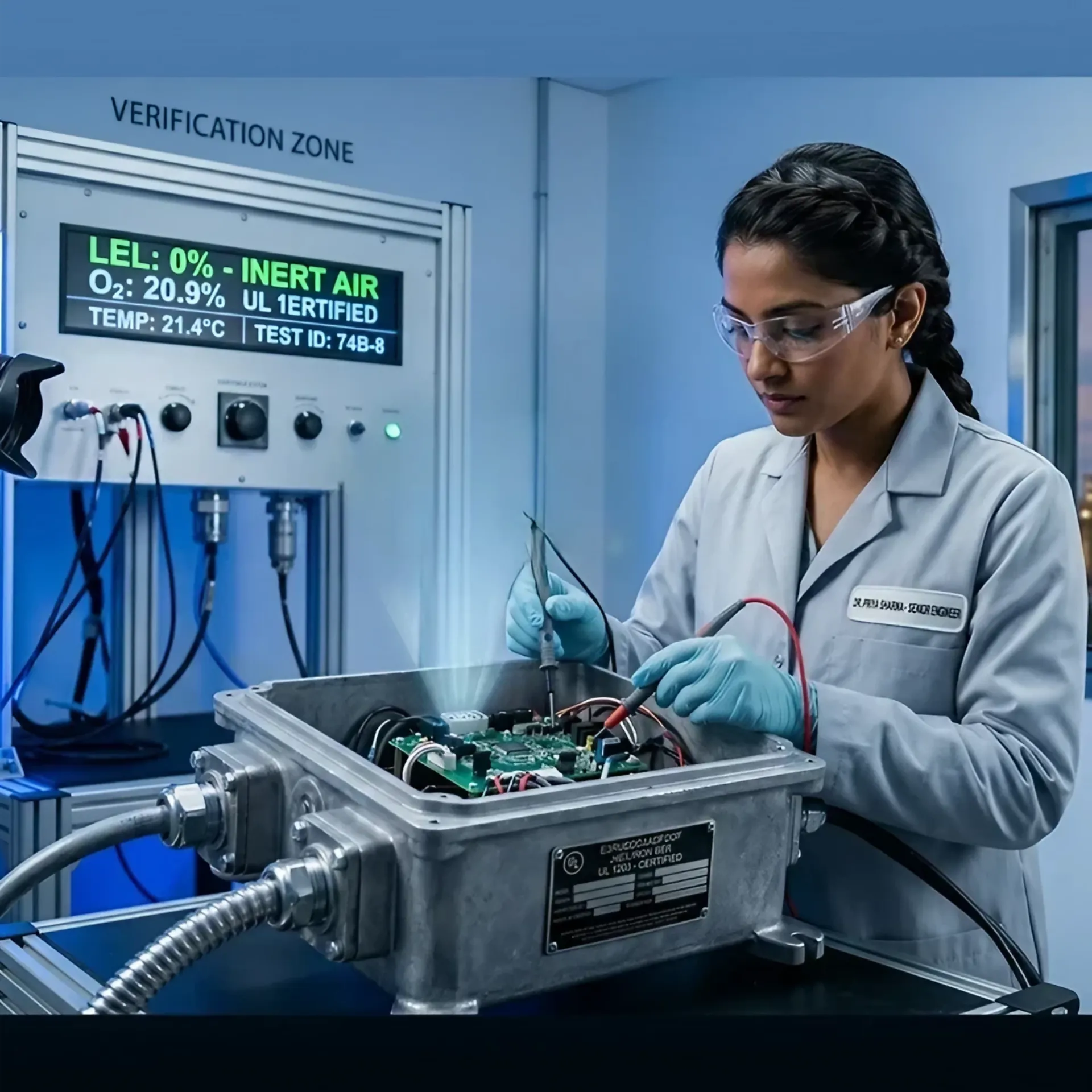
The Role of UL in the HazLoc Industry
UL (Underwriters Laboratories) is a global safety science leader and a designated Nationally Recognized Testing Laboratory (NRTL) by OSHA in the United States. In the context of Hazardous Locations, UL’s role is to verify that equipment will not become an ignition source in environments where explosive gases, vapors, or dusts are present.
Unlike general consumer electronics, HazLoc equipment certified by UL undergoes a “Double-Gate” evaluation process:
- Ordinary Location Safety: First, the device is tested for standard electrical risks like fire, shock, and personal injury.
- Hazardous Location Protection: Second, the device is tested against specific explosion-protection standards (such as Flameproof or Intrinsic Safety) based on the Class/Division or Zone system.
Expert Insight: Compliance isn’t just about “not exploding.” A UL-certified HazLoc product must remain safe even during a component failure. If a circuit fails, the UL standard ensures that the resulting spark or heat is either contained (Explosion-Proof) or too weak to cause an ignition (Intrinsically Safe).
Navigating UL Standards & Protection Methods
UL maintains a vast library of standards. For beginners and intermediate users, these are the primary Heavy Hitters you will encounter in the field:
| STANDARDS | PROTECTION METHOD | APPLICATION TYPE |
| UL 1203 | Explosion-Proof / Dust-Ignition-Proof | Heavy-duty enclosures, junction boxes, and motors. |
| UL 913 | Intrinsically Safe (IS) | Handheld sensors, tablets, and low-power instrumentation. |
| UL 121201 | Nonincendive | Equipment used in Division 2 (low probability) areas. |
| UL 60079 series | Zone-Based Protection | Harmonized standards for Zone 0, 1, and 2 environments. |
Understanding the UL Marks: Listed vs. Recognized
One of the most common points of confusion is the difference between the UL Listed and UL Recognized marks.
- UL Listed (The Circle Mark): This applies to standalone, finished products. A UL Listed sensor can be installed directly into the field according to its instructions.
- UL Recognized (The Backward RU Mark): This applies to components intended to be part of a larger system. A “Recognized” power supply cannot be used alone in a HazLoc area; it must be housed inside a “Listed” enclosure.
Why this matters legally: An OSHA inspector or an Insurance Auditor looks for the Listing on the final assembly. Using a non-certified component inside a certified box can “void” the entire certification of that assembly.
Official UL Resources & Directories
To verify a certificate or dive deeper into technical specifics, use these official UL portals. These are the primary tools used by HazLoc professionals daily:
- UL Product iQ™ Database: The official directory to verify UL certifications, search for file numbers, and confirm “Yellow Card” material ratings. (Requires a free account).
- UL Hazardous Locations Industry Portal: The central hub for UL’s global HazLoc services, training, and technical whitepapers.
- UL Standards Sales Site: Where engineers can purchase the full technical documents for standards like UL 1203 or UL 913.
- UL Guide Information (Category Codes): A resource to understand “CCNs” (Category Control Numbers), which define the scope of a product’s certification.
Next Steps for HazLocIQ Users:
If your facility follows the European or International model (Zones) rather than the North American (Divisions) model, you should next explore our pages on ATEX and IECEx to understand how these frameworks differ from UL.
