Navigating the Certification Landscape
Certification Basics:
The Path to Compliance
Understanding the relationship between federal mandates, electrical codes, and the testing laboratories that certify your equipment.
The Regulatory Chain
Compliance is built on the Big Three, federal OSHA mandates, NEC installation codes, and independent NRTL testing. Understanding how these entities interact from federal law to specific job site requirements is critical for safety managers ensuring their equipment and facilities meet legal standards for hazardous environment operation.
NRTL OvervieW
Nationally Recognized Testing Laboratories (NRTLs) like UL, CSA, and FM Global serve as independent safety judges. These accredited bodies rigorously evaluate products to ensure they meet strict performance standards. Learning to identify their specific marks confirms that a third party has verified the safety of your hardware.
reading labels
An equipment nameplate is a roadmap to its safe application. Master the skill of identifying critical field data, including protection methods, T-Ratings (Temperature Codes), and ambient temperature limits. Correctly decoding these labels prevents the dangerous mistake of deploying under-rated technology in a high-risk zone.
Global Schemes
Moving beyond North America requires navigating specialized international frameworks. Compare the European ATEX directive with the global IECEx scheme to ensure seamless cross-border compliance. Understanding these localized legal requirements is vital for global operations where regional safety mandates differ from domestic standards.
The Regulatory Chain of Command
HazLoc compliance is a three-tiered system involving federal mandates, technical standards, and independent verification.
osha
The Law
Federal law (OSHA 1910.307) mandates that all electrical equipment in hazardous locations must be approved or certified by a recognized authority.
NEC/NFPA 70
The Rulebook
The National Electrical Code (NEC) provides the specific technical requirements for how equipment must be designed and installed to prevent an explosion.
NRTL
The Judges
Nationally Recognized Testing Laboratories (NRTLs) are independent bodies that test equipment against the NEC standards to prove it is safe for use.
The Major Players:
Recognizing NRTL Marks
Recognizing the industry-standard stamps of approval that validate equipment safety in hazardous (classified) locations.
UL (Underwriters Laboratories)
The most recognized safety certification mark in the United States. UL develops the standards and performs the testing for a vast majority of North American electrical products.
Key Focus: North American Standards (UL 1203, UL 913).
CSA Group
Based in Canada but recognized globally (and by OSHA in the U.S.). They are a primary authority for certifying equipment for use in both the U.S. and Canadian markets.
Key Focus: U.S. & Canadian Harmonized Standards.
The “FM Approved” Mark
Nationally Recognized Testing Laboratories (NRTLs) are independent bodies that test equipment against the NEC standards to prove it is safe for use.
Key Focus: Property Insurance Requirements & High-Hazard Gear
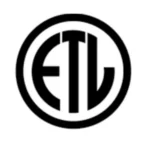
Intertek (ETL Mark)
One of the fastest-growing global NRTLs. An ETL mark indicates the product has been tested to the same NEC/UL standards as a UL-listed product.
Key Focus: Speed-to-Market & International Testing Capabilities.
DECODING THE NAMEPLATE
Reading the ID Tag
The Problem: HazLoc labels are packed with alphabet soup. Misinterpreting a single character can lead to installing a device where it doesn’t belong—a mistake that can be fatal.
The Solution: Every certified label must include these four data points:
- The Certification Mark: The Stamp of Approval from UL, CSA, or FM that verifies the testing was performed.
- The Classification: This defines the Class (the material), the Division or Zone (the frequency), and the Group (the chemical type).
- The Temperature Code (T-Rating): The maximum surface temperature the device will reach. This must be lower than the ignition point of the gases or dust present.
- Ambient Limits: The safe operating temperature range. Operating equipment outside these limits (e.g., in a $-50^\circ$C Arctic site) can void the explosion-proof integrity.
Global Certification Schemes
Navigating the transition from North American Listing requirements to the international Zone schemes used across Europe and the Middle East
NEC / CEC (US & Canada)
This system relies on the “Listing and Labeling” process mandated by OSHA.
- The Mark: UL, CSA, ETL, or FM.
- The Framework: Primarily based on the Class/Division system, though it increasingly incorporates the Zone system (NEC Article 505).
- Requirement: Equipment must be tested by an NRTL to specific UL or CSA standards
IECEx (The Global Scheme)
Created to facilitate international trade by providing a single, globally recognized certificate of conformity.
- The Mark: The IECEx text logo on the nameplate.
- The Framework: Exclusively uses the Zone system (Zone 0, 1, 2 for gases; Zone 20, 21, 22 for dusts).
- Requirement: Manufacturers must undergo regular factory audits (QAR) in addition to product testing.
ATEX (The EU Mandate)
ATEX is a legal requirement for any equipment sold or used in the European Union where explosive atmospheres may exist.
- The Mark: The distinctive “Ex” in a yellow hexagon.
- The Framework: Uses Categories (1, 2, 3) which map directly to the Zone system.
- Requirement: Focuses on both electrical and non-electrical (mechanical) ignition sources, such as friction or static.
Technical White Paper
THE BEGINNER’S GUIDE TO NRTL CERTIFICATION
A comprehensive breakdown of the North American certification process, including how to select the right laboratory and navigate the path to an OSHA-recognized listing.
Visual Reference Guide
GLOBAL MARKING SYMBOLS REFERENCE MAP
An all-in-one visual key to the logos, icons, and complex marking strings used by UL, CSA, ATEX, and IECEx to identify hazardous location ratings for your needs.
Field Checklist
5-STEP EQUIPMENT VERIFICATION CHECKLIST
A practical, one-page tool for field engineers to quickly verify that a device’s nameplate matches the specific Class, Division, and Group of the installation site.